Top 34 · #25 of 40 in Strategy
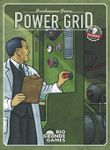
Power Grid
Become the CEO of a power company, bid on power plants, and buy coal, oil, garbage, and uranium on the resource market to supply electricity to cities — a classic economic strategy game.
Rules
Bid for power plants, buy coal, oil, garbage, and uranium on a fluctuating resource market, and connect cities to supply them with electricity. The player who can actually power the most cities wins — not the player with the most connected cities.
Components
| Component | Count | Notes |
|---|---|---|
| Board | 1 double-sided sheet | Germany map on one side, USA map on the other |
| Wooden houses (network markers) | 132 (6 colors × 22) | Place one each time you connect a city |
| Resource tokens | 84 | Coal (brown) 24 · Oil (black) 24 · Garbage (yellow) 24 · Uranium (red) 12 |
| Power plant cards | 42 | Numbered 03–40, 42, 44, 46, 50 |
| "Step 3" card | 1 | Shuffled into the power plant stack; drawing it starts the final phase |
| Resource refill summary cards | 5 | The amount resupplied each round depends on player count |
| Payment summary cards | 6 | Cities supplied → Elektro earned, at a glance |
| Auction hammer, discount token, "Step 2"/"Game End" barriers | 1–2 each | Play aids |
| Money (Elektro) | 1 / 5 / 10 / 50 bills | Every player starts with 50, regardless of player count |
"Gas" is not a resource in this edition
This guide covers the "Recharged" edition, which uses coal, oil, garbage, and uranium. Natural gas replacing garbage belongs to the separate 2014 printing "Power Grid Deluxe" (Europe/North America map). The current Korean edition sold by Korea Boardgames shares the same Germany/USA map and garbage resource as Recharged.
Setup
- 1Unfold the board. For a first game, the Germany side is recommended.
- 2Use only the number of contiguous areas matching your player count to define the playing zone (table below).
- 3Each player takes 22 houses, 50 Elektro, and one payment summary card. Place one house on space 0 of the cities-connected scoring track.
- 4Randomly determine player order and place one house per player on the player order track.
- 5Fill the resource market to its starting state — coal fills from space 1, oil from space 3, garbage from space 6, and uranium from space 14. The rest of the tokens form a supply pile.
- 6Place the resource refill summary card matching your player count beside the resource market.
- 7Shuffle the power plant cards with a plug on the back (03–15), draw the top 8, and arrange them in ascending order — the lowest 4 form the "current market" (available for auction), the rest the "future market" (preview only). Set one more card aside face down.
- 8Shuffle the remaining power plant cards (socket-backed, 16+) face down, bury the "Step 3" card somewhere in that stack, and place the card you set aside on top.
- 9Place the auction hammer and discount token beside the power plant market, and the "Step 2"/"Game End" barriers beside the scoring track.
| Players | Areas used |
|---|---|
| 2 | 3 |
| 3 | 3 |
| 4 | 4 |
| 5 | 5 |
| 6 | 5 |
Trimming the power plant deck for fewer players
Before shuffling, set aside unseen 1 plug-backed card for 2 players, 2 for 3 players, 1 for 4 players (none for 5–6), and 5 socket-backed cards for 2 players, 6 for 3 players, 3 for 4 players (none for 5–6). Fewer players means a smaller power plant pool, so big plants don't show up too late.
A round — five phases
- 1① Determine player order — the player with the most connected cities goes first (ties broken by the largest power plant); players take the matching spaces on the order track.
- 2② Auction power plants — in that order, each player may buy at most one power plant this round.
- 3③ Buy resources — now in reverse order (last place first), players buy resources for their power plants.
- 4④ Build houses — again in reverse order, players connect new cities to their networks.
- 5⑤ Bureaucracy — players earn Elektro for the electricity they supply, the resource market is resupplied, and the power plant market is updated.
Order can flip every round
The order set in phase ① governs phase ②. Phases ③ and ④ reverse that same order, so the last-place player buys resources and builds first. The leader buys and builds last, after the best resources and cheapest connections are already gone.
Auctioning power plants — current market of 4 + future market of 4
- 1The first player in turn order either starts an auction with one card from the current market (the front row of 4), or opts out of buying entirely this round.
- 2That plant's minimum bid is the number printed on it (or 1 Elektro if the discount token sits on it).
- 3Going clockwise, players raise the bid or pass. When only one bidder remains, they pay their bid and take the plant.
- 4The buyer immediately draws a replacement card, refilling the market to 8 and re-sorting it into the lowest 4 (current) and highest 4 (future).
- 5If the player who started the auction loses it, the winner starts the next auction. A player who has already bought a plant this round may neither start nor join another auction.
A maximum of 3 power plants
Buying a fourth plant forces you to immediately scrap one of your other plants (not the one you just bought). Resources on the scrapped plant move to a remaining plant only if it has room; anything left over returns to the supply, not the resource market.
Buying resources — cheapest space first
- 1This phase runs in reverse order, starting with the last-place player.
- 2A power plant can store at most twice the number of resource tokens it needs. Hybrid plants share that limit across both resource types.
- 3Always buy the cheapest filled space of a resource first. If a resource type runs out during the round, nobody can buy more of it until the next resupply.
- 4On the USA map, coal can always be bought for a flat 8 Elektro from the storage space once the market runs out.
Building houses — a network that grows over three Steps
A new city must connect from a city already in your network (your very first city may be any empty city). You pay the printed connection cost to reach it plus the building cost for placing your house there.
| Step | Houses allowed per city (all players combined) | Building cost |
|---|---|---|
| Step 1 | 1 (one player) | 10 Elektro |
| Step 2 | 2 (two players) | 10 → 15 Elektro |
| Step 3 | 3 (three players) | 10 → 15 → 20 Elektro |
When Step 2 and Step 3 begin
Step 2 begins at the start of phase ⑤ (Bureaucracy) in the round when someone connects the player-count threshold (7 cities for 2–5 players, 6 for 6 players). Step 3 begins the moment the "Step 3" card is drawn from the power plant stack; from then on the future market disappears and all 6 plants in the market are auctionable.
Phase ⑤ Bureaucracy — cities supplied → income
- 1In turn order, each player declares how many cities to supply this round (up to their connected cities, limited by resources and plants on hand).
- 2Consume the declared amount of resources, then earn the Elektro shown below. Even supplying zero cities guarantees 10 Elektro.
- 3Unused resources may be kept on a plant for next round, within its storage limit.
| Cities supplied | Income (Elektro) | Cities supplied | Income (Elektro) | Cities supplied | Income (Elektro) |
|---|---|---|---|---|---|
| 0 | 10 | 7 | 82 | 14 | 129 |
| 1 | 22 | 8 | 90 | 15 | 134 |
| 2 | 33 | 9 | 98 | 16 | 138 |
| 3 | 44 | 10 | 105 | 17 | 142 |
| 4 | 54 | 11 | 112 | 18 | 145 |
| 5 | 64 | 12 | 118 | 19 | 148 |
| 6 | 73 | 13 | 124 | 20 | 150 |
Each extra city supplied earns less than the one before (0→1 is +12, but 19→20 is only +2). That's why how many cities you can reliably supply right now matters more than how many power plants you hoard.
Ending the game
| Players | Connected cities that end the game |
|---|---|
| 2 | 18 |
| 3–4 | 17 |
| 5 | 15 |
| 6 | 14 |
- 1The moment phase ④ (Build Houses) ends and someone has reached the threshold above, the game ends immediately.
- 2In the final phase ⑤, nobody earns Elektro. Instead, everyone compares how many cities they can actually supply with their current plants and resources.
- 3Whoever can supply the most cities wins. Ties are broken by remaining money.
Ending the game doesn't mean winning it
Even the player whose connections triggered the end can lose if their power plants or resources can only supply fewer cities than a rival. As the end approaches, count how many cities you can actually power, not just how many you've connected.
Strategy tips
- Going early in phases ① and ② lets you pick plants first, but phases ③ and ④ then make you buy and build last. Racing to first place early just means paying the highest prices once your turn finally comes.
- Always check the future market (the back row of 4) — it previews which big plants are coming, so you can plan your budget ahead of time.
- More power plants isn't automatically better — what matters is reliably keeping them fueled. Hybrid (coal/oil) plants adapt better to resource market swings.
- As the end nears, calculate suppliable cities, not just connected ones. A player who only connected more cities but can't power them still loses.
Editions and expansions
| Edition/expansion | Notes |
|---|---|
| Power Grid Recharged (this guide) | Double-sided Germany/USA board; coal, oil, garbage, and uranium. Officially sold as a Korean edition by Korea Boardgames |
| Power Grid Deluxe (2014, 2F-Spiele / Rio Grande) | Europe/North America map, natural gas instead of garbage — a separate printing, not covered by this guide |
| 2-player "Against the Trust" | An automated rival power company (the Trust) claims cities and power plants; it only adds rules on top of the base game |
| Map expansions (France/Italy, Benelux/Central Europe, China/Korea, Brazil/Spain-Portugal, Russia/Japan, Nordic/UK-Ireland, Quebec/Baden-Württemberg, and more) | Each comes with its own map and rule adjustments. Korea Boardgames bundles several as "Power Grid Recharged Expansion: Map Collection" |
Map expansions and the 2-player Trust variant each come with their own insert rules. This guide covers only the base Germany/USA rules — check the expansion's own booklet for its specifics.
Frequently confused rules
Q. Can I skip buying any power plant during the auction phase?
Yes, you may opt out of the entire auction phase. You simply get no new plant that round.
Q. Can I auction a plant straight from the future market?
No. Whoever starts an auction must choose from the current market (the front row of 4) only. The future market just previews what's coming.
Q. What happens when I buy a fourth power plant?
The limit is 3. Buying a fourth forces you to immediately scrap one of your other plants (not the one just bought). Resources on it move to a remaining plant if there's room; the rest return to the supply.
Q. Does having the most connected cities always win?
No. The player who ends the game (by connections) and the winner (by suppliable cities) can differ. In the final bureaucracy phase nobody earns money — everyone just compares how many cities they can actually supply.
Q. Can I buy more resources than my plant can store?
No. A plant stores at most twice the resources it needs. Hybrid plants share that limit across coal and oil combined.
Q. Exactly when does Step 2 start?
At the start of the bureaucracy phase in the round when someone connects the player-count threshold (7 cities for 2–5 players, 6 for 6 players). The power plant market also replaces its lowest current-market card once at that moment.
History and editions
German designer Friedemann Friese reworked his own crayon game "Funkenschlag" (where connections were drawn in crayon directly on the map) into "Power Grid", released in 2004 by 2F-Spiele (German) and Rio Grande Games (English). It made the 2005 Games Magazine Games 100, was a 2005 Spiel des Jahres recommendation, a 2004 International Gamers Award Best Strategy Game nominee, and placed in the top 3 of the 2004 Meeples' Choice Award.
The 2014 tenth-anniversary "Power Grid Deluxe" redrew components with Europe/North America maps and swapped garbage for natural gas. The 2018 "Power Grid Recharged" brought back the double-sided Germany/USA board while adding new play aids like the discount token and Step barriers — this is the current base edition distributed by Rio Grande Games.
In Korea, Korea Boardgames first released a Germany/Korea map configuration, later switched to the same Germany/USA configuration as the English edition, and has distributed it as "Power Grid Recharged" since January 2021. BoardGameGeek classifies its average weight in the mid-3 range, a heavy economic game.
Sources
2F-Spiele / Rio Grande Games official Power Grid Recharged English rulebook (2018; riograndegames.com returns 403 directly — Internet Archive snapshot)Rio Grande Games — Power Grid Deluxe English rulebook (2014, Europe/North America map and natural-gas edition — not the subject of this guide, used only to cross-check the income table)Korea Boardgames — official retail product page for "Power Grid Recharged" (Korean edition confirmed by price/reviews; no official Korean rulebook PDF is posted there)BoardGameGeek 2651 — Power GridWiki cross-check — Wikipedia: Power Grid (board game)Wiki cross-check — Namuwiki: Power Grid (Korean)Rule summaries are reference content written by us, not quotations from the official rulebook. Always check the official rulebook for exact rules. Diagrams are original schematics, not rulebook illustrations.
Spotted a mistake? Tell us in the comments below →
Last updated 2026-10-11
💡 Master tip
Racing to first place too early just means buying oil and coal at the highest prices on the resource market. Stay in 2nd or 3rd place for a while and build up your funds first.
Similar games
Ready for something heavier
If this one has gotten too easy, try these — same feel, one step up in weight.
Tools you can request
Not built yet. Let us know if you want one — it goes on the list.
Resource market supply-demand price calculator
Automatically deducts the live price when you buy a quantity of a resource
Power plant capacity stage table
Shows the resources needed and the number of cities each owned plant can supply
Comments
Share your thoughts, report a mistake, or request a tool. No sign-in needed — nicknames are not verified, so anyone can use the same one.
Loading…