Top 23 · #18 of 40 in Strategy
Wingspan
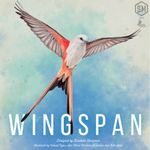
An engine-building game with beautiful bird art, in which you run a wildlife preserve. The more bird cards you place in a habitat (forest, grassland, wetland), the stronger that habitat's basic action becomes, and the birds already placed there trigger one after another, so a single action gives you several effects at once.
Rules
An engine-building game in which you collect birds to fill three rows — forest, grassland, and wetland. The more birds a row holds, the stronger that row's action becomes, and one action sets off the brown powers of every bird in that row, right to left. The clock of the game is that your turns drop from 8 to 7 to 6 to 5 across the four rounds.
At a glance
| Item | Details |
|---|---|
| Length | 4 rounds. Each round gives you fewer turns — 8, then 7, 6, and 5 |
| Your turn | One of 4 actions: play a bird / gain food / lay eggs / draw bird cards |
| Core structure | The more birds fill a habitat row, the stronger that row's action, and the birds already there activate along with it |
| Winning | Most points at the end. On a tie, the player with the most unused food tokens wins |
Your action cubes are your remaining turns
You start with 8 action cubes, but at the end of each round one cube stays on the goal board to mark your end-of-round goal score. That is why turns fall from 8 to 7 to 6 to 5. An engine has to be laid down in the early rounds to pay off.
Components
| Component | Count | Notes |
|---|---|---|
| Bird cards | 170 | North American birds. Each card carries a habitat, food cost, points, nest, egg limit, wingspan, and power |
| Bonus cards | 26 | Scored at the end of the game if you meet their condition |
| Goal tiles | 8 | Double-sided. Only 4 are used per game, on a random side |
| Goal board | 1 | Double-sided — green (competing for places) / blue (1 point per item) |
| Food tokens | 103 | Five types: invertebrate, seed, fish, fruit, rodent |
| Egg miniatures | 75 | The colors have no meaning |
| Player mats | 5 | 3 habitats × 5 slots |
| Action cubes | 40 | Each player uses 8 cubes of one color |
| Dice | 5 | They go into the birdfeeder dice tower |
| Bird tray, birdfeeder, first player token | 1 each | The bird tray holds 3 face-up bird cards |
| Scorepad, rulebook, appendix | 1 each | Every individual bird power is explained in the appendix |
Some printings add the Swift-Start pack
English printings from September 2019 onward include 10 Swift-Start bird cards and 4 Swift-Start player guides, which teach a first game in place of the rulebook. The Korean rulebook (2021) does not mention them — if your box has none, just follow the rulebook.
Setup and reading the player mat
- 1Shuffle the bird cards into the bird deck and populate the bird tray with 3 face-up cards from it.
- 2Put all food and egg tokens together as the supply, accessible to everyone.
- 3Toss the 5 dice into the birdfeeder.
- 4Choose which side of the goal board to use — green is the default, blue is good with new players.
- 5Shuffle the goal tiles without reading them and place 4 of them, random side up, on the goal board. Return the rest to the box.
- 6Shuffle the bonus cards into a deck.
- 7Each player takes 1 player mat, 8 action cubes of one color, 2 random bonus cards, 5 random bird cards, and 5 food tokens (1 of each type).
- 8Keep up to 5 bird cards; for each bird you keep, discard 1 food token. Keep 2 birds and you have 3 food left; keep 4 birds and you have 1.
- 9Keep 1 of your 2 bonus cards and discard the other. You may look at both while choosing which birds to keep.
- 10Choose a first player at random and give them the first player token.
- Each habitat is tied to one action. Forest gains food, grassland lays eggs, wetland draws bird cards.
- A habitat holds at most 5 birds, and a bird always goes into the leftmost exposed slot of its row.
- So as birds accumulate, the slot you use in that row moves right and the amount you get grows.
- The bonus conversion differs by row — forest lets you discard 1 card for 1 food, grassland pay 1 food for 1 egg, wetland discard 1 egg for 1 card.
Your turn — exactly one action
On your turn you take one of the four actions and pass clockwise. All three habitats are always available to you.
- 1Place 1 action cube on the leftmost exposed slot of the row you chose, and take the amount shown on that slot.
- 2If the slot shows a bonus conversion, you may make exactly one extra exchange (optional).
- 3Move the cube from right to left, one slot at a time, using the brown «when activated» power of each bird it passes. Skip any you do not want.
- 4When the cube reaches the action name on the far left, your turn ends. Leave the cube there.
«Play a bird» is the one action that activates nothing
Playing a bird is the only action that does not activate a row of birds. You only trigger the white «when played» power of the card you just placed.
Action 1 — play a bird from your hand
- 1Choose a bird from your hand and find the leftmost exposed slot of its habitat. Place a cube at the top of that column, on the «play a bird» row, and pay the egg cost — 1 egg in columns 2 and 3, 2 eggs in columns 4 and 5, none in column 1.
- 2Pay the bird's food cost to the supply. Only the food tokens next to your mat count; food cached on cards cannot be spent.
- 3Place the card on that slot and move your cube to the «play a bird» label on the left.
- 4If the card has a «when played» power, you may use it now.
- 1. Habitat — the rows this bird may go in. Choose one if several are shown
- 2. Food cost — what you pay to play it. Watch for «wild», «no food», and «/» (or)
- 3. Points — added as printed at the end of the game
- 4. Nest type — counted by end-of-round goals and bonus cards
- 5. Egg limit — the most eggs this card can ever hold
- 6. Power — brown, pink, or white, which sets when it triggers
- 7. Wingspan — some powers compare this value
| Food symbol | Meaning |
|---|---|
| Invertebrate, seed, fish, fruit, rodent | The five food types |
| Wild | Any one of the five types will do |
| No food | The bird has no food cost |
| / (slash) | «Or» — for example 1 fish or 1 fruit |
Any 2 food count as any 1 food
Only when paying a bird's food cost may you spend any 2 food tokens as any 1 food token. Need a fish and have none? Pay 2 other food instead. This exchange cannot be used anywhere else in the game.
Action 2 — gain food and activate the forest
- Place a cube on the leftmost exposed forest slot and gain food from as many birdfeeder dice as that slot shows.
- You always gain 1 food token per die. Remove the die from the birdfeeder and take the matching token from the supply.
- One die face lets you choose between two types — even then you gain only 1 token, not 2.
- If the slot shows a card-to-food conversion, you may discard 1 bird card from your hand for 1 more food. You must still pick from the dice left in the birdfeeder.
- Dice removed from the birdfeeder do not go back until the birdfeeder is refilled.
- Your food tokens are public information, and there is no limit on how many you may hold.
Two ways the birdfeeder is refilled
First, whenever the tray is empty, throw all 5 dice back in. Second, if the dice in the tray all show the same face (including when only 1 die is left) and you are about to gain food for any reason, you may throw all 5 dice back in first. The «choose one of two» face counts as its own unique face.
Action 3 — lay eggs and activate the grassland
- Place a cube on the leftmost exposed grassland slot and lay as many eggs as it shows, taking them from the supply onto your birds. Egg color means nothing.
- You may put them all on one bird or spread them around, but never past a bird's egg limit.
- If you run out of space, the excess eggs are simply lost.
- If the slot shows a food-to-egg conversion, you may pay 1 food token to lay 1 more egg.
- An egg stays on its card for the rest of the game unless discarded, and is worth 1 point each.
Eggs are points and currency at the same time. Playing a bird in columns 2 or 3 costs 1 egg and columns 4 or 5 cost 2, and the wetland conversion eats eggs too. Hoard them and you cannot play birds; spend them all and your score hollows out.
Action 4 — draw bird cards and activate the wetland
- Place a cube on the leftmost exposed wetland slot and draw as many cards as it shows.
- Draw from the 3 face-up cards on the bird tray or from the top of the bird deck, in any mix.
- There is no hand limit.
- If the slot shows an egg-to-card conversion, you may discard 1 egg from one of your birds to draw 1 more card.
- Gaps in the bird tray are not refilled immediately — you refill them at the end of your turn.
- If the bird deck runs out, reshuffle all discarded bird cards into a new deck.
At the end of every round, all face-up cards on the bird tray are discarded and replaced with 3 new ones. If a card on the tray is the one you want, take it within that round.
Bird powers — the color tells you when
| Power | When | Notes |
|---|---|---|
| When activated (brown) | Whenever you take that habitat's action | They fire in the order the cube passes them — right to left |
| Once between turns (pink) | On another player's turn | Usable once between the end of your turn and the start of your next one |
| When played (white) | The moment that card is played | It never triggers again |
- Cache — putting a food token on a bird. It does not count as food you hold and cannot pay for birds, but it is worth 1 point each at the end.
- Tuck — flocking birds slide other cards underneath themselves. Each tucked card is worth 1 point.
- Some birds are marked as predators, and some powers compare wingspan values.
- Every power is optional. Skip any you do not want to use.
- Pink powers fire on other people's turns, so it helps to tell the table what your pink power is and what triggers it.
End of the round and end-of-round goals
- 1Once everyone has used all their action cubes, the round ends. Remove all cubes from your player mat.
- 2Score this round's end-of-round goal and place 1 action cube on the goal board to mark what you scored.
- 3Discard all face-up cards on the bird tray and replenish it with 3 new ones.
- 4Pass the first player token clockwise.
| What a goal counts | Details |
|---|---|
| Birds in a habitat | Bird cards in that habitat row (one face for each of the three habitats) |
| Eggs in a habitat | Eggs sitting on birds in that row. Several eggs on one bird each count |
| Sets of eggs | One set is 1 egg in the forest, 1 in the grassland, and 1 in the wetland. Which bird or column does not matter |
| Birds with eggs by nest type | Birds of that nest type holding at least 1 egg. Each bird counts once, however many eggs it has |
| Eggs by nest type | Eggs sitting on birds of that nest type |
| Total birds played | Every bird card on your player mat |
| Round | 1st | 2nd | 3rd | Below |
|---|---|---|---|---|
| Round 1 | 4 pts | 1 pt | 0 | 0 |
| Round 2 | 5 pts | 2 pts | 1 pt | 0 |
| Round 3 | 6 pts | 3 pts | 2 pts | 0 |
| Round 4 | 7 pts | 4 pts | 3 pts | 0 |
- The table above is the green side (the default). The blue side gives 1 point per item, up to a maximum of 5.
- You must have at least 1 of the targeted item to score at all — for a goal counting grassland birds, you need at least 1 bird there.
- Even out of the places, you must still put a cube on the 0 space. Cubes leaving your mat is exactly what shortens the next round.
- Star nests count toward every nest-type goal.
Ties on the green side
Tied players put their cubes on the same place and the place right below it is left empty. At the end of the game the tied players add the values of their place and the skipped place, divide, and round down. On a goal scoring 5, 2, and 1, two players tied for 1st each take 3 points ((5 + 2) ÷ 2), and the next player scores 1 point for 3rd place, not 2nd.
Game end and scoring
The game ends at the close of round 4. Use the scorepad and add all of the following together.
| Item | Points |
|---|---|
| Bird cards on your player mat | As printed on each card |
| Bonus cards | As printed on each card |
| End-of-round goals | As marked on the goal board (all 4) |
| Eggs on your birds | 1 point each |
| Food cached on your birds | 1 point each |
| Cards tucked under your birds | 1 point each |
Most points wins. On a tie, the player with the most unused food tokens wins; if still tied, they share the victory.
Strategy that follows straight from the rules
- Keep birds with brown powers that fetch more food or cards. The rulebook gives the same advice — those effects cluster in brown.
- Keep the food your kept birds ask for. Every bird you keep in setup costs you a food token, so the food left over has to match the birds left over or your first turns stall.
- Read your bonus card before picking birds. The rules explicitly let you look at both while choosing.
- Turns drop 8, 7, 6, 5. How many times a bird played in round 1 or 2 fires in rounds 3 and 4 is its real rate of return.
- Stacking one row only strengthens that row. Fill all three to some degree or you run out of worthwhile actions late.
- Eggs are a cost too. Columns 4 and 5 want 2 eggs each, so budget whole turns for laying.
- All 4 end-of-round goals are face up from setup. Look at which habitats and nests they count and aim your first birds there — it saves you a wasted cube.
Editions and expansions
| Expansion | Original title | Notes |
|---|---|---|
| Wingspan: European Expansion | European Expansion (2019) | Adds 81 new bird cards |
| Wingspan: Oceania Expansion | Oceania Expansion (2020) | 95 new bird cards, and nectar as a new food type |
| Wingspan: Asia | Asia (2022) | 90 new bird cards, plus a two-player Duet mode and a large-group Flock mode |
| Wingspan: Americas Expansion | Americas Expansion (2026) | 111 new bird cards. The Korean release had a published rulebook translation correction |
This guide covers the base game only
Expansions can change the food types and even the player mat (nectar, in Oceania). If you have shuffled expansion cards in, check that expansion's own rulebook. Every number here is base game.
- Solo play uses the «Automa» opponent. The rulebook itself covers the multi-player game only; Automa comes as its own booklet.
- The blue side of the goal board (1 point per item, 5 maximum) cuts direct competition, which is what the rulebook suggests for new players.
- The Swift-Start guides in English printings walk each player through their first four turns. Once everyone has learned, shuffle the 10 Swift-Start birds into the deck.
Rules people get wrong
Q. Do the birds already in a row activate when I play a bird there?
No. Playing a bird is the only action that does not activate a row. Only the white «when played» power of the card you just placed triggers.
Q. Can I pay for a bird with food cached on a card?
No. Cached food does not count as food you hold. It only ever pays out as 1 point each at the end of the game.
Q. When can I spend 2 food as 1 food of my choice?
Only when paying a bird's food cost. It is not allowed anywhere else, including when a power asks you to spend food.
Q. When may I re-throw the birdfeeder dice?
When the birdfeeder is completely empty, and when every die left shows the same face (including a single remaining die) and you are about to gain food — you re-throw all 5 first. The «choose one of two» face counts as its own unique face.
Q. What if I lay more eggs than my birds can hold?
The excess is simply lost. Not laying the full amount does not convert into anything else.
Q. I scored nothing on an end-of-round goal. Do I still place a cube?
Yes. You must place a cube on the 0 space. That is why each round leaves you one fewer turn.
Q. Is there a limit on cards in hand or food tokens?
No. There is no hand limit, no limit on food beside your mat, and no limit on food cached on cards.
Q. Is the bird tray refilled as soon as I take a card?
No — you refill it at the end of your turn. So drawing 2 cards in one turn means choosing both from the same tray.
History and editions
| Item | Details |
|---|---|
| Designer | Elizabeth Hargrave |
| Illustrators | Natalia Rojas, Ana María Martínez Jaramillo, Beth Sobel |
| Publisher | Stonemaier Games, 2019 |
| Main awards | Kennerspiel des Jahres 2019 and the Deutscher Spiele Preis 2019 |
| Korean release | Distributed by Korea Boardgames; the Korean rulebook is hosted by DiveDice |
- The rulebook credits the bird information to the Cornell Lab of Ornithology, the Audubon guide, and the Sibley field guides. The base game covers North American birds.
- The birdfeeder dice tower was designed by Tower Rex. The container that holds the dice is itself the food market of the game.
- Printings from September 2019 onward began including the Swift-Start promo pack (10 bird cards and 4 player guides). It entered the English rulebook text by revision r24, and the Korean rulebook (2021) still does not carry it.
- The title «Wingspan» is the measurement itself. Each card prints a wingspan, and some powers compare that value.
Sources
Official Korean rulebook, Korea Boardgames (PDF, 12 pages)Official Stonemaier Games rulebook and appendix (WS_Rulebook_r24, WS_Appendix_r17)Cross-checked against Wikipedia: Wingspan (board game)Cross-checked against Namuwiki: Wingspan (Korean)Rule summaries are reference content written by us, not quotations from the official rulebook. Always check the official rulebook for exact rules. Diagrams are original schematics, not rulebook illustrations.
Spotted a mistake? Tell us in the comments below →
Last updated 2026-09-14
💡 Master tip
Work out in advance which habitat fits the round goals and place your birds there, and pick up combo birds that trigger when you gain food first. Rather than leaning on one habitat, fill all three in balance so your actions do not dry up late in the game.
Similar games
Ready for something heavier
If this one has gotten too easy, try these — same feel, one step up in weight.
Comments
Share your thoughts, report a mistake, or request a tool. No sign-in needed — nicknames are not verified, so anyone can use the same one.
Loading…