Top 104
Qwirkle
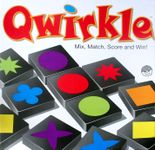
A tile game where you score points by extending lines of six colours and six shapes that share either a colour or a shape. It plays like Scrabble with colour-and-shape patterns instead of words, so it works for the whole family regardless of language, and it won the 2011 German Game of the Year award.
Rules
An abstract tile game played with 108 tiles in six colours and six shapes, where you extend lines that are either all one colour with different shapes, or all one shape with different colours. There is no text to read, only colour and shape, and completing a line of six tiles earns a six-point Qwirkle bonus on top of the line's own score.
Components — 108 tiles
| Component | Count | Notes |
|---|---|---|
| Tiles | 108 | 6 colours (red, orange, yellow, green, blue, purple) × 6 shapes, 3 of each combination |
| Bag | 1 | For shuffling and drawing tiles |
| Scorepad | None included | Each player tracks their running total with paper and pencil |
The object is to strategically create and expand lines of colour and shape to score the most points. No scorepad is included, so each player tracks their own running total with paper and pencil after every turn.
Setup
- 1Place all 108 tiles in the bag and mix them.
- 2Each player draws 6 tiles, keeping them hidden from the others. This is your hand.
- 3Each player declares the largest number of tiles in hand that share one attribute, colour or shape (duplicate tiles do not count toward this number).
- 4Whoever can play the most tiles sharing an attribute plays all of them to start the game. Ties are broken in favour of the oldest player.
- 5Play then continues clockwise.
Your turn — choose one of three actions
- 1① Add one tile to the grid, then draw one tile to bring your hand back up to six.
- 2② Add two or more tiles that share one attribute, either colour or shape, to a single line, then draw enough tiles to return to six.
- 3③ Instead of playing, trade in some or all of your tiles and draw the same number of replacements.
- 4If you have no tile you can legally add to the grid, option ③ (trading) is mandatory.
Tiles played in one turn need not touch each other
When you play several tiles under option ②, they do not have to touch one another directly. The gaps between them must already be filled by other tiles on the grid, so that the result is a single unbroken line.
The core rule — lines are same colour or same shape
Only two ways to form a line
Two or more touching tiles form a line. A line is either all the same colour with every shape different, or all the same shape with every colour different. You cannot change both colour and shape along the same line.
No duplicates are allowed in a line
Since each colour has only 6 shapes and each shape only 6 colours, a line can hold at most 6 tiles, and a colour-shape combination already used in that line cannot be played there again.
Scoring and the Qwirkle bonus
| Situation | Score |
|---|---|
| Creating or extending a line | One point for every tile in that line (including tiles already there) |
| A tile belongs to two lines at once | You score both lines' points |
| Completing a line of six (a Qwirkle) | 6 for the line + 6 bonus = at least 12 |
If one turn creates or extends several lines at once, you score every line that turn touched, added together.
Ending the game and winning
- 1Once there are no more tiles to draw from the bag, play continues without replenishing hands.
- 2The first player to play every tile in hand ends the game and scores a six-point bonus.
- 3Add up each player's running total; the highest score wins.
Strategy — straight from the official rules
- You usually score more by adding to more than one line at a time.
- Avoid creating a line of five unless you are holding the tile that completes it — otherwise you may be handing an opponent a Qwirkle worth at least 12 points.
- Count tiles. Before chasing a Qwirkle, check whether the colour or shape you still need is actually still unplayed.
- Even with a legal play available, deliberately trading instead can be the better choice if playing now would open a gap an opponent could use to complete a Qwirkle.
- Scan the whole grid each turn for where your unused colour-shape combinations are clustering — it makes completing a long line later a matter of planning rather than luck.
- As the bag empties, emptying your own hand first becomes more valuable. Late in the game, grabbing the six-point bonus for going out first can matter more than chasing one more big line.
Player count and other products in the line
The official rules are the same for 2 to 4 players — there is no separate rule set by player count. Fewer players means longer between your own turns to plan, while more players means the grid changes more between your turns.
The dice and card versions are different products
Qwirkle Cubes (a dice version), Qwirkle Cards / Qwirkle Rummy (a card version), the Qwirkle Connect and Qwirkle Select expansions, and bundles like Qwirkle Big Box and Qwirkle Trio all have different components and rule details, so they do not share this guide's 108-tile base-game rules. Qwirkle is also sold by several Korean retailers, but this research could not confirm an official Korean-licensed edition or distributor.
Frequently confused rules
Q. Do two tiles played in the same turn need to touch each other?
No. The gap between them just needs to already be filled by another tile on the grid, so the result is one unbroken line.
Q. Can a line change both colour and shape at once?
No. A line must be all one colour with different shapes, or all one shape with different colours — never both changing together.
Q. Can I trade tiles even if I have a legal play?
Yes. Trading is always an option. It only becomes mandatory when you have no legal tile to add.
Q. Does a tile at the intersection of two lines score only once?
No. If it belongs to two lines (one running each way), you add up the points for both lines.
Q. How many points is the Qwirkle bonus?
Six. Combined with the six points for the completed line itself, a Qwirkle is worth at least 12 points.
Q. Does the game end the instant the bag runs out?
No. Play continues without replenishing hands, and the game ends only when a player empties their hand first, at which point that player also scores a six-point bonus.
History and awards
Designed by Susan McKinley Ross and first published in 2006 by MindWare in the United States. MindWare is a brand under Oriental Trading Company (OTC), itself a Berkshire Hathaway subsidiary. The game won the 2011 Spiel des Jahres (German Game of the Year), along with a Mensa Select award, a Parents' Choice Gold Award, and others — often cited as MindWare's most-awarded game.
Later spin-offs include the dice-based Qwirkle Cubes (2009), the card-based Qwirkle Cards (also sold as Qwirkle Rummy, 2015), the Qwirkle Connect and Qwirkle Select expansions, and bundles such as Qwirkle Big Box and Qwirkle Trio. This research could not confirm an official Korean distributor or release date.
Sources
Official English rules — Qwirkle Rules (complete 2 pages)BoardGameGeek: Qwirkle (25669)Wiki cross-check — English Wikipedia: QwirkleWiki cross-check — Namuwiki: Qwirkle (Korean)Rule summaries are reference content written by us, not quotations from the official rulebook. Always check the official rulebook for exact rules. Diagrams are original schematics, not rulebook illustrations.
Spotted a mistake? Tell us in the comments below →
Last updated 2026-10-10
💡 Master tip
Building a line of five tiles hands your opponent a Qwirkle (6+6 points) for free. If you don't hold the sixth tile needed to complete that line yourself, don't stop at five.
Similar games
Ready for something heavier
If this one has gotten too easy, try these — same feel, one step up in weight.
Tools you can request
Not built yet. Let us know if you want one — it goes on the list.
Turn score tracker
Enter the points scored each turn to show the running standings
Comments
Share your thoughts, report a mistake, or request a tool. No sign-in needed — nicknames are not verified, so anyone can use the same one.
Loading…