Top 29 · #21 of 40 in Strategy
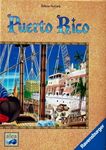
Puerto Rico
A legendary classic in which you play a Puerto Rican governor developing an island by choosing roles (Settler, Mayor, Builder, Craftsman, Trader, Captain, Prospector). Known as the originator of the 'role selection' mechanism, it is regarded as a classic that went on to influence countless later Euro games.
Rules
Each round, someone chooses one role card, and then every player in turn carries out the action that role grants. The player who chose it also keeps a small privilege — this is the original 'role selection' mechanism. Develop the island, build buildings, and ship goods to score victory points.
Components
| Component | Count | Notes |
|---|---|---|
| Player boards | 5 | 12 island spaces + 12 city spaces + a 7-role summary |
| Governor card | 1 | Marks who starts the round by choosing a role |
| Role cards | 8 | Settler, Mayor, Builder, Craftsman, Trader, Captain, and 2 Prospectors |
| Game board | 1 | Building display and the bank |
| Building tiles | 49 | 5 large violet buildings (1 each, 2 spaces) + 12 small violet types (2 each) + 20 production buildings |
| Doubloons | 54 | 46 value-1 + 8 value-5 |
| Island tiles | 58 | 8 quarries + 50 plantations (8 coffee, 9 tobacco, 10 corn, 11 sugar, 12 indigo) |
| Colonist ship | 1 | Supplies new colonists |
| Colonists | 100 | Brown round wooden markers |
| Trading house | 1 | Holds at most 4 goods |
| Goods barrels | 50 | 9 coffee, 9 tobacco, 10 corn, 11 sugar, 11 indigo |
| Cargo ships | 5 | Only 3 are used, sized by player count — 4 to 8 spaces |
| Victory point chips | 50 | 32 value-1 + 18 value-5 |
Corn needs no production building
The other four goods (indigo, sugar, tobacco, coffee) each need a dedicated production building, but corn is produced directly from an occupied plantation, with no building required.
Setup (for 3–5 players)
- 1Place the game board in the middle and lay out all buildings on their assigned spaces. Sort doubloons by value on the bank.
- 2Each player takes 1 player board and starting money (2 doubloons for 3 players, 3 for 4, 4 for 5).
- 3Choose a starting player, who takes the governor card and an indigo plantation tile; the rest receive indigo or corn plantation tiles clockwise (per the official distribution table).
- 4Lay out all 8 quarry tiles face up; shuffle the remaining plantation tiles into 5 face-down stacks and reveal one more tile than the player count.
- 5Prepare role cards for the player count (3 players: remove 1 of the 2 Prospectors; 4 players: remove 1; 5 players: use all 8).
- 6Use only 3 cargo ships sized for the player count, and set aside only the victory point total for that player count.
Round structure — choose a role, everyone acts
- 1The governor chooses one of the remaining role cards, places it before them, takes that role's privilege, then performs the action.
- 2Starting with the player to the governor's left and going clockwise, every other player performs the same action (only the chooser gets the privilege).
- 3The player to the governor's left then chooses one of the remaining role cards and repeats, continuing until everyone has chosen a role once.
- 4At the end of the round, place 1 doubloon from the bank on each role card that nobody chose this round.
- 5Return the used role cards, pass the governor card to the next player clockwise, and begin the next round.
Taking a role is mandatory; the action and privilege are optional
On your turn you must take a role card, but performing its action is optional. If you skip the action, you also forgo that role's privilege (e.g., a Builder who builds nothing gets no 1-doubloon discount). The Captain is the exception: you must load goods whenever you can.
The 7 roles
| Role | Privilege (chooser only) | Action (everyone) |
|---|---|---|
| Settler | May take a quarry tile instead | Place 1 plantation (or quarry) tile on an empty island space |
| Mayor | Take 1 extra colonist from the supply | Take colonists from the colonist ship in turn order and place them |
| Builder | Pay 1 doubloon less to build | Build 1 building at normal cost (1 per round limit) |
| Craftsman | Take 1 extra good you can produce | Produce goods from your occupied production buildings and plantations |
| Trader | Gain 1 extra doubloon when selling | Sell 1 good to the trading house (if there is room) |
| Captain | Gain 1 extra VP when loading | Load goods onto cargo ships for VP (mandatory if possible) |
| Prospector (one of 2 copies in play) | Gain 1 doubloon from the bank | None — the only role with no shared action |
Roles have no fixed order
Unlike a numbered call order, whoever's turn it is may choose any remaining role card. Depending on player count, 1 or 2 cards go unused each round.
Buildings — cost, VP, and the quarry discount
Buildings are grouped into four quarry-discount columns (1–4). Each occupied quarry you own reduces a building's cost by up to its column number — a column-1 building can never be discounted by more than 1 doubloon no matter how many quarries you have, while column-4 (large) buildings can drop by up to 4.
| Column (max discount) | Building | Cost | VP | Effect / production |
|---|---|---|---|---|
| 1 (max 1) | Small Indigo Plant | 1 | 1 | Produces up to 1 indigo |
| 1 (max 1) | Small Sugar Mill | 2 | 1 | Produces up to 1 sugar |
| 1 (max 1) | Small Market | 1 | 1 | +1 doubloon per sale |
| 1 (max 1) | Hacienda | 2 | 1 | +1 plantation tile during the Settler phase |
| 1 (max 1) | Construction Hut | 2 | 1 | May take a quarry instead during the Settler phase |
| 1 (max 1) | Small Warehouse | 3 | 1 | Store 1 extra kind of good after shipping |
| 2 (max 2) | Indigo Plant | 3 | 2 | Produces up to 3 indigo |
| 2 (max 2) | Sugar Mill | 4 | 2 | Produces up to 3 sugar |
| 2 (max 2) | Hospice | 4 | 2 | +1 colonist during the Settler phase |
| 2 (max 2) | Office | 5 | 2 | May sell a good type already in the trading house |
| 2 (max 2) | Large Market | 5 | 2 | +2 doubloons per sale |
| 2 (max 2) | Large Warehouse | 6 | 2 | Store 2 extra kinds of goods after shipping |
| 3 (max 3) | Tobacco Storage | 5 | 3 | Produces up to 3 tobacco |
| 3 (max 3) | Coffee Roaster | 6 | 3 | Produces up to 2 coffee |
| 3 (max 3) | Factory | 7 | 3 | 0–5 bonus doubloons by number of goods kinds produced |
| 3 (max 3) | University | 8 | 3 | +1 colonist during the Builder phase |
| 3 (max 3) | Harbor | 8 | 3 | +1 VP per shipment |
| 3 (max 3) | Wharf | 9 | 3 | A private (imaginary) ship usable during the Captain phase |
| 4 (up to quarries owned) | Guild Hall | 10 | 4 | Game end: +1 VP per small production building, +2 per large |
| 4 (up to quarries owned) | Residence | 10 | 4 | Game end: +4 to +7 VP by filled island spaces (≤9/10/11/12) |
| 4 (up to quarries owned) | Fortress | 10 | 4 | Game end: +1 VP per 3 colonists |
| 4 (up to quarries owned) | Customs House | 10 | 4 | Game end: +1 VP per 4 VP chips |
| 4 (up to quarries owned) | City Hall | 10 | 4 | Game end: +1 VP per violet building (including itself) |
Large violet buildings take two spaces, not one
Guild Hall, Residence, Fortress, Customs House, and City Hall each need two adjacent empty city spaces, and once built a space can never be freed. With only 12 city spaces, building all five is effectively impossible.
Shipping rules — 3 cargo ships, one good per ship
- Only 3 cargo ships are used, sized by player count (e.g. 5, 6, and 7 spaces for 4 players).
- Each cargo ship carries only one kind of good. You cannot load a kind already present on one of the other two ships.
- If you can load, you must, and you choose only one kind per turn. If that kind fits several ships, you must choose the ship where you can load the most.
- After loading ends, only full ships are emptied; a partially filled ship stays as is until the next Captain phase.
- Each barrel loaded earns 1 VP, regardless of which good it is.
Goods with nowhere to go are discarded unless you have storage
After the Captain phase, each player may keep 1 good on their windrose. An occupied small or large warehouse lets you also keep its specified number of additional kinds. Anything left over is returned to the supply.
Game end and scoring
- 1The game ends after the round in which one of these occurs: ① not enough colonists to fill the colonist ship during the Mayor phase, ② someone builds on their 12th city space, ③ the victory point chips run out.
- 2Each player adds their VP chip total + the printed VP of every building they've built (occupied or not) + the bonus VP of any occupied large violet buildings.
- 3Ties are broken by combined doubloons and goods (1 good = 1 doubloon); the higher total wins.
Buildings score even when empty — large building bonuses do not
Every building gives its printed VP regardless of occupancy. But the extra end-game effects of Guild Hall, Residence, Fortress, Customs House, and City Hall apply only while they are occupied.
Strategy that follows directly from the rules
- When choosing a role, weigh how much your opponents gain, not just your own benefit — be careful with roles everyone shares, like Settler, Mayor, and Craftsman.
- Before the Captain phase, check the 3 ships' remaining space and loaded colors, and plan your Craftsman production around them — goods with nowhere to go are simply discarded.
- If you're aiming at expensive column-3/4 buildings (University, Harbor, Wharf, the large violet buildings), secure quarries early to maximize the discount.
- Doubloons accumulate on roles nobody picks. Taking a neglected role late can net you both the action and the stacked gold.
Editions and expansions
| Item | Details |
|---|---|
| Original edition | Published simultaneously in 2002 by Germany's alea and the US's Rio Grande Games as the classic 3–5 player base game — this guide's baseline. |
| Official expansions | Expansions 1 and 2 (14 new buildings, etc.) released in 2004, followed by alea's 10th-anniversary 'Treasure Chest' expansion in 2009 (per Wikipedia). |
| 2014 new edition | Rio Grande Games reprinted the game bundling expansions 1 and 2 as part of the base set, with new artwork. |
| Korean releases | Korea Boardgames has published 3 Korean editions: a 1st edition (translation of the original English set), a 2nd edition (the new edition, including expansions 1–2), and the 2024 《Puerto Rico 1897》 (including expansions 1–4), per Namuwiki. |
| 《Puerto Rico 1897》 retheme | A remake responding to criticism of the colonial subject matter: the 'governor colonizing the island' premise was retheme to 'farmers achieving self-reliance and modernization' (per Namuwiki). Role and building names/art may differ, but no Korean rulebook text was obtained, so this guide uses the classic edition's rules and commonly used translated terms. |
Frequently confused rules
Q. If I choose a role card, can I skip its action?
Taking the role card is mandatory, but the action is optional. However, skipping the action also forfeits that role's privilege — except the Captain, who must load goods whenever possible.
Q. What happens to a role card nobody chooses?
At round's end, the bank places 1 doubloon on every role card that went unchosen this round. Whoever later picks that card keeps all the accumulated gold.
Q. Does choosing the Prospector give anyone else anything?
No. The Prospector is the only role with no shared action — only the chooser gains 1 doubloon from the bank.
Q. Is it a loss if I can't fill a cargo ship?
Yes. Only full ships are emptied after the Captain phase. A partially loaded ship remains as is into the next Captain phase, with even less room available.
Q. Do buildings score VP even without colonists?
Yes, every building's printed VP applies regardless of occupancy. But the bonus effects of large violet buildings and the production of production buildings only work while occupied.
Q. Do I need to build all 5 large violet buildings?
No. Build only the ones you want — with just 12 city spaces, building all 5 is effectively impossible. Each large building takes two adjacent spaces.
History and reception
Designed by Andreas Seyfarth, published simultaneously in 2002 by Germany's alea and the US's Rio Grande Games. The same year it won the Deutscher Spiele Preis and was a Spiel des Jahres finalist, followed by the International Gamers Award in 2003 (per Wikipedia).
It is recorded as having held the #1 or #2 spot on BoardGameGeek's overall rankings for years (per Wikipedia). Its 'role selection' structure — one player picks a role each round, and everyone performs that action — influenced countless later Euro games, most directly the designer's own simplified card game San Juan, and Race for the Galaxy, developed alongside it (per Wikipedia).
The game's colonial, sugar-plantation subject matter has also drawn persistent criticism for erasing and romanticizing the historical realities of the Taíno people and slavery (per Wikipedia). Korea Boardgames' 2024 Korean edition, 《Puerto Rico 1897》, is a retheme responding to that criticism, recasting the premise from 'a governor colonizing the island' to 'farmers achieving self-reliance and modernization' (per Namuwiki).
Sources
Rio Grande Games — official Puerto Rico English rules (Andreas Seyfarth, 2002/2009 corrected edition; riograndegames.com returns 403 directly — Internet Archive snapshot)Wiki cross-check — Wikipedia: Puerto Rico (board game)Wiki cross-check — Namuwiki: Puerto Rico (board game, Korean)Korea Boardgames — product page for 《Puerto Rico 1897》 (confirms a Korean edition exists; not a rulebook)Rule summaries are reference content written by us, not quotations from the official rulebook. Always check the official rulebook for exact rules. Diagrams are original schematics, not rulebook illustrations.
Spotted a mistake? Tell us in the comments below →
Last updated 2026-10-10
💡 Master tip
About 80 percent of winning comes down to the timing of choosing roles that don't give your opponents more benefit than yourself. Balancing production buildings, colonist supply, and shipping capacity is what builds a stable score over the long run.
Similar games
Ready for something heavier
If this one has gotten too easy, try these — same feel, one step up in weight.
Tools you can request
Not built yet. Let us know if you want one — it goes on the list.
Captain-phase shipping calculator
Tracks each ship's good-type limit and counts leftover goods that get discarded
Building bonus VP calculator sheet
Calculates conditional bonus VP for large buildings (City Hall, Guild Hall, etc.)
Comments
Share your thoughts, report a mistake, or request a tool. No sign-in needed — nicknames are not verified, so anyone can use the same one.
Loading…