Top 21 · #16 of 40 in Strategy
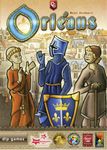
Orléans
Set in medieval Orléans, this is a bag-building Eurogame where you draw Follower tokens from a bag to expand your buildings and trade network. It plays like deck-building, but instead of cards you draw tokens at random from a bag, which gives it a distinct charm: managing probabilities while trying to assemble the exact combination you need.
Rules
A bag-building Eurogame where you draw Follower tiles from a bag to fill the Action Spaces of your own board, and only a fully filled Place can be activated. With a fixed 18-round end point, the game is about which Followers to add to your bag and when to convert goods and Citizen Tiles into victory points.
Components
| Component | Count | Notes |
|---|---|---|
| Large game board / Beneficial Deeds board | 1 each | The Beneficial Deeds board is a small separate board |
| Player boards | 4 | Your personal board with Action Spaces |
| Followers Bags | 4 | One cloth bag per player for drawing Character Tiles |
| Merchant Tokens | 4 | Your trading figure that moves on the map |
| Trading Stations | 40 (10 per player) | Built in towns for income and end-game VP |
| Wooden markers | 28 (7 per player) | Farmer, Boatman, Craftsman, Trader, Scholar, Knight tracks plus the Development Track |
| Character Tiles | 104 | 7 types: Farmer, Boatman, Craftsman, Trader, Scholar, Knight, Monk |
| Goods tiles | 90 | 24 Grain, 21 Cheese, 18 Wine, 15 Wool, 12 Brocade |
| Technology Tiles | 16 | Earned via the Craftsmen track; permanently replace a Character Tile requirement |
| Citizen Tiles | 14 | Earned at certain track ends and by completing Beneficial Deeds |
| Coins | 47 | Shared supply |
| Place Tiles | 20 | Chosen via the Traders track to expand your city |
| Hour Glass Tiles | 18 | One drawn per round — sets the game's total length |
| Overview cards / Start Player Token | 2 / 1 | Reference cards and the first-player marker |
Orléans plays 2-5 and always runs exactly 18 rounds. At lower player counts (2 or 3), unused Followers and Goods tiles are removed before setup.
Setup
- 1Each player takes a Player Board, a Followers Bag, 5 coins, 1 Merchant Token, 10 Trading Stations, and 7 wooden markers.
- 2Place your markers on the first space of the Farmer, Boatman, Craftsman, Trader, Scholar, and Knight tracks, plus the Development Track — 7 tracks in all.
- 3Each player puts one marked Farmer, Boatman, Craftsman, and Trader (4 Followers) into their bag. These four stay with you for the entire game — they cannot be used for Beneficial Deeds and are never lost to the Plague event.
- 4Place those same 4 marked Followers on your Player Board's Market spaces, too — this gives you an initial setup for round 1.
- 5Sort the neutral (unmarked) Character Tiles by profession on the large board, stacked on their matching buildings (Farm House, Village, University, Castle, Monastery).
- 6Split the 20 Place Tiles into stacks by the Roman numeral (I/II) on their backs, and shuffle Goods tiles onto the Road and Waterway spaces and the Goods Market.
- 7Pull the «Pilgrimage» Hour Glass Tile to the top, shuffle the rest underneath — round 1 always opens with the Pilgrimage event.
- 8Remove the unused player colors' Followers, some neutral Followers, and some Goods tiles per the player-count table (2- and 3-player adjustments).
Your starting four are special
Your marked Farmer, Boatman, Craftsman, and Trader cannot be used for Beneficial Deeds and are never lost to the «Plague» event. Only the unmarked Followers you recruit later are exposed to both.
A round — 7 phases
- 1① Hour Glass — the Start Player flips the next tile. It sets this round's event, and the round in which the 18th tile is flipped is the game's last round.
- 2② Census — whoever is furthest ahead on the Farmers Track gets 1 coin, whoever is furthest behind pays 1 coin (ties mean nobody pays or gains; in a 2-player game, the trailing player doesn't pay).
- 3③ Followers — each player draws from their bag up to the number allowed by their Knights Track (4 at the start) and places them on their own Market. Once the Market is full, no more can be drawn.
- 4④ Planning — move Character Tiles from your Market onto the required Action Spaces of a Place. A Place activates only when every one of its spaces is filled, and you may fill it across several rounds.
- 5⑤ Actions — starting with the Start Player and clockwise, each player carries out one activated Place or passes. Once you pass, you cannot act again this round. Used Followers return to your bag.
- 6⑥ Event — resolve this round's Hour Glass event for everyone (Pilgrimage is the one exception, already applied in Phase 5).
- 7⑦ Start Player — the Start Player Token passes to the player on the left.
An activated Place need not be used right away
Once a Place is fully filled, you may leave it activated and use it in a later round. It stays activated until you actually carry out the action and remove its Followers (Technology Tiles are never removed at all).
Seven Follower types and managing your bag
| Follower | Recruited at | Track reward |
|---|---|---|
| Farmer | Farm House | 1 good + advance on the Farmers Track (feeds the Census) |
| Boatman | Village | Coins + advance on the Boatmen Track (first to the last space gets a Citizen Tile) |
| Craftsman | Village | A Technology Tile + advance on the Craftsmen Track |
| Trader | Village | A Place Tile (city expansion) + advance on the Traders Track |
| Scholar | University | Development Points + advance on the Scholars Track |
| Knight | Castle | Advance on the Knights Track (raises how many Followers you draw in Phase 3) |
| Monk | Monastery | No track — instead a wildcard usable in place of any other Follower |
Six Follower types — Farmer, Boatman, Craftsman, Trader, Scholar, and Knight — have their own track. Only the Monk has none; instead it may be placed on any Action Space that calls for another Follower type (the reverse is never true — no tile may replace a Monk).
A bigger bag is harder to control
Every new Follower type you add can lower the odds of drawing the exact combination you need. Raising your draw count via Knights and curating your bag toward combinations you actually need are two separate decisions.
A full Market stops you from drawing
Your Player Board has a limited number of Market spaces. Unused Followers sitting there can prevent you from drawing your full Knights-Track allowance.
Activating Places and Technology Tiles
Every Place is made of Action Spaces that each require a specific Follower. For example, receiving another Farmer at the Farm House requires 1 Boatman and 1 Craftsman — both spaces must be filled before the Farm House activates.
| Place | Requires | Effect |
|---|---|---|
| Farm House | Boatman + Craftsman | Receive a Farmer, 1 good, advance the Farmers Track |
| Village | Boatman or Craftsman or Trader (choose one) | Receive that Follower + advance its track |
| University | Scholar | Receive Development Points → advance the Development Track |
| Castle | Knight | Receive a Knight + advance the Knights Track (raises draw count) |
| Monastery | Monk | Receive a Monk (no track bonus) |
| Ship / Wagon | 1 Follower (any type) | Move your Merchant Token along a waterway/road; take a good if present |
| Guildhall | 1 Follower (any type) | Build a Trading Station in your Merchant Token's town (one per town, except Orléans) |
| Scriptorium | 1 Follower (any type) | Receive 1 Development Point |
| Town Hall | 1-2 Followers onto Beneficial Deeds spaces | Place Followers on the Beneficial Deeds board for coins/Development Points |
Technology Tiles permanently replace a Follower
A Technology Tile earned via the Craftsmen Track may be placed on any Action Space once, and it stays there for the rest of the game, filling that space without a Follower. The first Technology Tile you place must replace a Farmer; later ones may replace any Character Tile except Monks. A Monk's space can never be replaced by a Technology Tile, and no Place may hold more than one.
Traders Track, Trading Stations, Town Hall, and Beneficial Deeds
Advancing the Traders Track lets you choose a Place Tile to attach to your Player Board, adding a new Place you can use. The first choice must come from stack I; afterward you may choose from either stack I or II. A Trading Station built via Guildhall is limited to one per town regardless of owner — except Orléans itself, where each player may build their own.
Town Hall is the only Place that uses the Beneficial Deeds board. Placing 1 or 2 Followers on its open spaces rewards the printed coins (1, 2, or 3) or Development Points. Whoever fills the last remaining space of a given Deed also receives a Citizen Tile. Your marked starting Followers (Farmer, Boatman, Craftsman, Trader) may not be placed here, and each Deed space accepts only the specific Character Tile shown — Technology Tiles and Monks cannot substitute.
| Development Track space | Effect |
|---|---|
| Coin space | Moving onto or past it grants the printed coins |
| Citizen Tile space | First to reach or pass it receives a Citizen Tile |
| Development Status space | Moving onto or past it sets your Development Status to that number (starts at 1) |
Development Status affects several things at once
Your Development Status sets the coins you receive from the «Income» event, the Hospital Place Tile's payout, and the VP multiplier for Trading Stations and Citizen Tiles at game end. Raising it once pays off in several places simultaneously.
Hour Glass events and bankruptcy (Torture)
| Event (3 copies each, 18 total) | Effect |
|---|---|
| Pilgrimage | No Monks may be recruited this round (the only event applied in Phase 5, not Phase 6) |
| Income | Receive coins equal to your Development Status |
| Harvest | Return 1 Grain/Cheese/Wine to the Goods Market, or pay 5 coins if you have none, else undergo Torture |
| Taxes | Pay 1 coin per 3 goods you own, else undergo Torture |
| Trading Day | Receive 1 coin per Trading Station you built |
| Plague | Draw a Follower from your bag and return it to the board (your marked starting Followers are exempt) |
Nothing to pay means Torture (bankruptcy)
If you cannot pay for Harvest or Taxes, you cover the shortfall with any mix of Trading Stations, Followers (drawn at random and returned), Development Points (move back one space), Goods, Place Tiles, or Technology Tiles. Everything lost this way is gone for good except Development Points.
Game end and scoring
The game ends after the round in which the 18th Hour Glass Tile is drawn. Whoever has built the most Trading Stations receives the one remaining Citizen Tile (nobody does if tied), then everyone scores as follows.
| Item | Score |
|---|---|
| Coins | 1 VP each |
| Grain / Cheese / Wool / Wine / Brocade | 1 / 2 / 4 / 3 / 5 VP each |
| Trading Stations + Citizen Tiles | (combined count) × your Development Status |
Breaking ties
Whoever has the most VP wins. Ties go to whoever is further along the Development Track, and if that is still tied, the game ends in a shared win.
Strategy the rulebook supports
- Pick up a few Knights early. A higher Phase 3 draw count lets you activate more Places per round.
- Don't grow your Follower mix carelessly. More types in the bag can lower the odds of drawing the exact combination you need — curate toward what you'll actually use.
- Use Technology Tiles to clear bottlenecks. Replacing a frequently needed space frees that Follower type for other uses (remember the first one must replace a Farmer).
- Raise your Development Status early. It affects Income payouts, the Hospital, and the end-game multiplier at once.
- Keep a small buffer of coins or goods for Harvest and Taxes. Losing a Place Tile or Development Points to bankruptcy usually hurts more than the coins would have.
Editions and expansions
| Edition/Expansion | Notes |
|---|---|
| dlp games base game (2014) | The bilingual German/English rulebook this guide is based on |
| Capstone Games English reprint (2021) | Listed among BGG's versions for English-language markets |
| Orléans: 5th Player Box | Adds components for a 5th player |
| Orléans: Die Reise nach Tours (released in English as Invasion) | A large official expansion — outside the scope of this guide |
| Orléans: Christmas Market | A small mini-expansion |
| Orléans Stories | A separate standalone release in the same setting — not covered here |
No Korean edition was confirmed
No dedicated Korean product or article was found via Korea Boardgames or Namuwiki, and none of the 6 publishers listed on BGG (dlp games, Arclight Games, Arrakis Games, Baldar, BGA Plus, Capstone Games) is a Korean distributor. This looks unpublished in Korean, but no explicit statement confirming that absence was found, so it is left unverified rather than asserted.
Advanced variant (official rulebook option) — before round 1, starting with the Start Player and in turn order, each player may remove one Place Tile (from stack I or II, 2 tiles each in a 2-player game) from the game. Recommended for experienced groups who want a different mix of Places each time.
Frequently confused rules
Q. Must I execute an activated Place the same round I fill it?
No. It stays activated into later rounds. It only becomes inactive once you actually carry out the action and remove its Followers.
Q. Can a Monk go anywhere?
A Monk may fill any space calling for another Follower type. The reverse is never true — a Monk's own required space can never be filled by any other tile.
Q. Can a Technology Tile go on any Place?
Your first Technology Tile must replace a Farmer. Later ones may go anywhere except a Monk's space or a Place with only a single required space. No Place may hold more than one Technology Tile.
Q. Can my marked starting Followers be lost to the Plague?
No. The Farmer, Boatman, Craftsman, and Trader you received at setup are exempt from the Plague and also cannot be placed for Beneficial Deeds. Only unmarked Followers recruited later are affected by both.
Q. Can I keep building Trading Stations in any town?
Each town holds only one Trading Station regardless of owner. Orléans is the single exception, where every player may build their own.
Q. What happens if I have nothing to pay for Harvest or Taxes?
You cover the shortfall with any mix of Trading Stations, Followers, Development Points, goods, Place Tiles, or Technology Tiles. Everything but Development Points is gone from the game for good.
History and reception
| Item | Details |
|---|---|
| Design | Reiner Stockhausen |
| Illustration | Klemens Franz |
| Publisher | dlp games, 2014 |
| Major reprints | Capstone Games (English-language), plus Arclight Games, Arrakis Games, Baldar, BGA Plus, and others in various languages |
| Nominations/finalist | 2014 Golden Geek nominee for Strategy/Game of the Year/Most Innovative, 2015 International Gamers Award nominee, 2015 JUG Adult Game of the Year finalist — all are nominations, not wins |
BGG lists an average complexity (weight) around 3.0, placing it among heavier Euro games, and it sat in the BGG Top 40 as of early 2024 (its exact live rank should be re-checked at publication time). Neither English Wikipedia nor Namuwiki has a dedicated article for this game, so this history section relies only on facts confirmed via BGG and the rulebook's own credits page.
Sources
Official dlp games English rulebook (Orléans, 2014 base game)BoardGameGeek 164928 — designer, publisher, weight, and award-nomination cross-check (Wayback snapshot, 2024-02-14)Wiki cross-check — Namuwiki search: no dedicated article confirmed (2026-10-10)Wiki cross-check — English Wikipedia search: no dedicated article confirmed (2026-10-10)Rule summaries are reference content written by us, not quotations from the official rulebook. Always check the official rulebook for exact rules. Diagrams are original schematics, not rulebook illustrations.
Spotted a mistake? Tell us in the comments below →
Last updated 2026-10-10
💡 Master tip
Recruit Knights early to quickly raise the number of tokens you draw each round to 5-6, letting you take more actions than everyone else. But if your token types grow too varied, the odds of drawing the combination you actually need can drop instead, so manage your bag around the combinations you need rather than just growing it blindly.
Similar games
Ready for something heavier
If this one has gotten too easy, try these — same feel, one step up in weight.
Tools you can request
Not built yet. Let us know if you want one — it goes on the list.
Followers bag probability counter
Calculates the odds for each remaining profession token
Round event checklist
Shows upcoming round events like plague, taxes, and harvest in advance
Comments
Share your thoughts, report a mistake, or request a tool. No sign-in needed — nicknames are not verified, so anyone can use the same one.
Loading…