Top 145
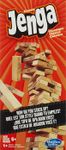
Jenga
The classic dexterity game where you pull wooden blocks one at a time from a stacked tower and place them back on top — a game that needs no explanation. The crash and groan of the tower falling is the whole source of the fun.
👨👧👦 Played with our kids
Played with children aged 5 and 3.
Rules
Build an 18-story tower from 54 wooden blocks, then take turns pulling a block from below and stacking it on top. The last player to stack a block without toppling the tower wins.
Components
| Component | Count | Notes |
|---|---|---|
| Hardwood blocks | 54 | Stacked three per story to form an 18-story tower |
| Loading tray | 1 | Holds the blocks in place while you build; removed once the tower is finished |
This age rating differs from the catalog
The official rules state 1 or more players, ages 8 to Adult. This service's catalog listing shows age 6, so the figures differ — this guide follows the official rulebook.
Setup — building the 18-story tower
- 1Empty all 54 blocks onto a flat surface.
- 2One player uses the loading tray to build layers of 3 blocks, turning each layer 90 degrees from the one below it.
- 3This creates an 18-story tower, and as play moves blocks to the top, the tower can grow much taller than its starting height.
- 4Carefully stand the loading tray upright, then slide it out so the tower stands on its own.
Taking turns
- 1The player who built the tower goes first.
- 2Play then passes to the left in order.
- 3On your turn, choose one block and carefully remove it, using only one hand.
- 4Place the block on top of the tower, at right angles (90°) to the blocks just below it.
- 5You remove and stack exactly 1 block per turn.
Which blocks you may remove
- 1You may only remove a block from anywhere below the highest completed story.
- 2You may not remove from the highest completed story itself, nor from the story still being built (fewer than 3 blocks).
- 3Touching other blocks to find a looser one is allowed.
- 4But if that touch moves a block out of place, you must fix it with one hand before touching any other block.
- 5While stacking, always complete a 3-block story before starting a higher one.
If the block you're moving makes the tower fall, that player loses.
The one-hand rule and the 10-second rule
Jenga adds two more limits — how many hands you may use at once, and exactly when your turn officially ends.
- 1Use only one hand while removing and stacking. You may switch hands between turns, but never use both at once during the same turn.
- 2Your turn ends 10 seconds after you stack your block, or as soon as the player to your left touches one — whichever comes first.
What the 10-second rule decides
If the tower falls within those 10 seconds (or before the next player touches a block), it is the player who just stacked who is responsible. The rule exists to settle whose turn it was when the tower fell.
Ending and winning
- 1Players keep removing and stacking blocks in turn until someone topples the tower, which ends the game immediately.
- 2The last player to stack a block without toppling the tower wins.
- 3The player who topples the tower takes on the job of building the tower for the next game.
Tips that follow directly from the rules
- Since tapping other blocks to find a looser one is allowed, you can compare a few before committing to one.
- You may switch hands freely between turns, so you can switch to whichever hand feels steadier ahead of time.
- If your touch moves a block, you must restore it before touching anything else, so a shaky hand is a reason to slow down, not rush.
- Toppling the tower also means you must build the next one, so a risky pull carries a real cost.
Variants
| Variant | Details |
|---|---|
| Official solo play (in the rulebook) | When playing alone, you may remove a block from any level — unlike the multiplayer game. Keep building until the tower falls, and measure your record height. |
| Jenga Giant™ / Jenga XXL | Large wood or cardboard versions sold on the official Jenga site, standing 1.2–2.4 m (4–8 feet) tall. |
| Jenga Xtreme / Jenga Quake | Official Jenga-brand variants: Xtreme uses parallelogram-shaped blocks, and Quake adds a shaking gimmick (per English Wikipedia and the official site; detailed rules unverified). |
| Jenga: Truth or Dare and other licensed editions | A three-color-block truth-or-dare version, plus licensed tie-ins such as Angry Birds and Harry Potter (per English Wikipedia). |
| Korean retail spin-off names | Namuwiki states that spin-offs sold in Korea go by names such as couple Jenga, color Jenga, and animal Jenga, but whether their components and rules match the official Hasbro lineup is unconfirmed. |
This guide's rules are for the classic 54-block game. The variants above may use a different block count or rules, so they do not simply carry over.
Frequently confused rules
Q. Are the top three stories all off-limits?
No. Only the single highest completed story is off-limits. Everything below that is a completed story and fair game.
Q. Can I tap other blocks to test them?
Yes. Touching other blocks to find a looser one is allowed. But if that touch moves a block, you must put it back with one hand before touching anything else.
Q. Can I switch hands freely?
Yes. You just need to use only one hand at a time while removing and stacking, and you may switch which hand you use whenever you like. You just can't use both hands at once in the same turn.
Q. If some time passes before the tower falls, is the earlier player off the hook?
No. Your turn ends 10 seconds after you stack, or when the player to your left touches a block, whichever comes first. If the tower falls before that, it's the fault of whoever just stacked.
Q. Can I start a new story before finishing the current one?
No. You must always completely fill a 3-block story before starting a higher one.
Q. Can I play by myself?
Yes. In the official solo variant, unlike the multiplayer game, you may remove a block from any level, and you keep building alone until the tower falls, measuring your record height.
History
Jenga was designed by British designer Leslie Scott, who first unveiled it at the London Toy Fair in 1983 (per English Wikipedia).
The rights changed hands several times; Pokonobe Associates holds worldwide distribution rights while Hasbro (under the Milton Bradley brand) has published it in various countries since 1987 (per English Wikipedia).
It was inducted into the U.S. National Toy Hall of Fame in November 2020 (per English Wikipedia). A Namuwiki search did not turn up its Korean distributor or release year (checked 2026-10-10).
Sources
Hasbro — official English Jenga rules PDF (Milton Bradley, ©2000 Pokonobe Associates)Official Jenga product site — Giant, Xtreme, Quake and other variantsWiki cross-check — English Wikipedia: JengaWiki cross-check — Namuwiki: Jenga (Korean)Rule summaries are reference content written by us, not quotations from the official rulebook. Always check the official rulebook for exact rules. Diagrams are original schematics, not rulebook illustrations.
Spotted a mistake? Tell us in the comments below →
Last updated 2026-10-10
💡 Master tip
The middle block of each layer is the safest to remove — pulling an end block sharply reduces the tower's torsional rigidity. Tapping a block loose with your fingertip leaves less friction than pushing it straight through.
Ready for something heavier
If this one has gotten too easy, try these — same feel, one step up in weight.
Comments
Share your thoughts, report a mistake, or request a tool. No sign-in needed — nicknames are not verified, so anyone can use the same one.
Loading…