Top 37 · #9 of 52 in Family
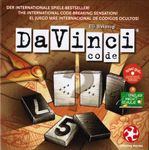
Da Vinci Code / Coda
A classic number-deduction game in which you guess your opponents' black and white number tiles one at a time, using the rule that they stand in ascending order. Tiles showing the same number can stand side by side no matter their color, which widens what you have to work through. The games are short and turn on pure logic, so it plays well again and again at any player count.
👨👧👦 Played with our kids
Played with children aged 6 and 4.
Rules
A deduction game where you knock down the wall of numbers your opponents stand in ascending order, one tile at a time. The rules fit in five lines, but one condition — guess wrong and your own tile is revealed — makes the whole game.
26 tiles
| Tile | Count | Note |
|---|---|---|
| Black number tiles | 12 | 0 to 11, one each |
| White number tiles | 12 | 0 to 11, one each |
| Joker tiles | 2 | 1 black · 1 white. Marked “—” instead of a number |
Two ordering rules
① Lower numbers go to the left. ② When two numbers are equal, black goes to the left of white. Because of these two rules, the position of an opponent's tile is itself information.
Setup
- 1Spread all 26 tiles face down in the middle of the table and mix them well.
- 2Take 4 each with 2 or 3 players, 3 each with 4 players, at random.
- 3Stand your tiles in the correct order as a wall, with the blank side facing your opponents.
- 4The rest of the tiles stay face down in the middle.
A joker can go anywhere
A joker has no number, so you may put it anywhere between 0 and 11. You can use it to disguise a sequence you have already built — but once you have placed it, you cannot move it during the game.
Your turn — draw, guess, then decide whether to stop
- 1Draw 1 tile from the middle. This is your Clue Tile. Stand it to one side where only you can see it. Do not slot it into your wall yet.
- 2Point at one of an opponent's tiles and say its number and color out loud.
- 3If you are right, that player tips the tile forward for everyone to see. It stays revealed for the rest of the game.
- 4After a correct guess you may guess again or stop here. If you continue, you may target the same player or a different one.
- 5If you stop, slot the Clue Tile face down into its correct place in your wall and pass the turn.
- 6If you are wrong, you must slot the Clue Tile face up into its correct place in your wall. Your turn then ends.
Continue or stop — that is the whole game
Push your luck after a correct guess and get it wrong, and you may have given away more than you just learned. When you are not sure, stop and slot the Clue Tile in hidden.
Playing the jokers
- If you draw a joker you may place it anywhere between 0 and 11. Once placed, it stays there.
- You may call an opponent's tile a joker. In that case you only say “joker” — the position does not matter.
- You are right only if the tile really is a joker. Calling a numbered tile a joker is a wrong guess.
Putting a joker at the end of your sequence invites the guess “that must be a 0 or an 11.” Conversely, once a joker is revealed, the range deductions around it collapse and your opponents lose their bearings.
End of the game
- A player whose tiles are all revealed is out.
- The last player still holding a hidden tile wins.
- With 3 or more players, the rest keep playing after someone is knocked out.
Rules people get wrong
Q. After a correct guess, must I guess again?
No. You choose whether to continue or stop. If you stop, the Clue Tile goes in hidden and the turn passes.
Q. May I skip adding the Clue Tile after a wrong guess?
No. You must reveal it and slot it into its correct place. That is the price of being wrong.
Q. Can I say just the number and skip the color?
You have to name the color as well, because every number exists as both a black and a white tile.
Q. Can I target a tile that is already revealed?
No. Only hidden tiles can be guessed.
Q. Can I rearrange my tiles mid-game?
No. You only insert new tiles in the place the ordering rules require; the rest stays as it is.
Q. What if the middle runs out of tiles?
You guess without drawing a Clue Tile. A wrong guess then reveals nothing and your turn simply ends.
History and editions
| Item | Detail |
|---|---|
| Origin | From the Japanese “Algo” family of deduction games |
| Common Korean name | Da Vinci Code |
| Name abroad | Coda |
The number of tiles per player and the handling of jokers vary a little between editions. Where your rulebook differs from this guide, follow your rulebook. This guide has not been checked against the official rulebook.
Sources
Rules summary — UltraBoardGames: Da Vinci CodeWiki cross-check — BoardGameGeek: Da Vinci CodeWiki cross-check — Namuwiki: Da Vinci Code (Korean)Rule summaries are reference content written by us, not quotations from the official rulebook. Always check the official rulebook for exact rules. Diagrams are original schematics, not rulebook illustrations.
Spotted a mistake? Tell us in the comments below →
Last updated 2026-09-08
💡 Master tip
Note the color and position of every tile your opponents drew along with the numbers already revealed, and you narrow the possibilities fast. Bring the position of the joker tiles into your deduction too, and the range of places their tiles can sit shrinks much further.
Similar games
Ready for something heavier
If this one has gotten too easy, try these — same feel, one step up in weight.
Tools you can request
Not built yet. Let us know if you want one — it goes on the list.
Tile odds calculator
Lists the black and white numbers still possible
Comments
Share your thoughts, report a mistake, or request a tool. No sign-in needed — nicknames are not verified, so anyone can use the same one.
Loading…