Top 148 · #10 of 12 in Card game
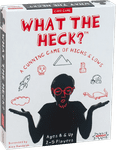
What the Heck? (Hol's der Geier)
Everyone uses the same 1–15 cards once each. The highest unique bid wins a positive Meerkat, while the lowest unique bid takes a negative Vulture; matching numbers all cancel.
👨👧👦 Played with our kids
Played with children aged 6 and 4.
Rules
✓ Rulebooks cross-checked · verified with a physical copy
Sources checked
- Owner's complete physical Korea Board Games rule sheet checked (2026-09-16)
- Korea Board Games official product page
- AMIGO Games Inc. official English rules (2019 scan mirror)
- AMIGO official German rules, version 2.0
- AMIGO official product page
- BGG 175 — players, time, weight and editions
- Wikipedia cross-check — What the Heck?
- Namuwiki cross-check — no article for this game
Every player has the same 1–15 cards and uses each number once to win positive Meerkats while avoiding negative Vultures. Matching numbers cancel, so the best bid is often the number nobody else chooses.
Components and setup
| Component | Count | Contents |
|---|---|---|
| Player Cards | 75 | Five colours × one 1–15 set |
| Point Cards | 15 | Meerkats +1 to +10; Vultures −1 to −5 |
- 1Choose a colour and take all fifteen Player Cards numbered 1–15.
- 2Return unused colour sets to the box.
- 3Shuffle the fifteen Point Cards and place them point-side down in the centre.
One round — choose, then reveal together
- 1Turn over the top Point Card.
- 2Everyone secretly chooses one Player Card and places it face down.
- 3Reveal all chosen cards simultaneously.
- 4Use the Point Card's sign and the unique bids to determine who collects it.
- 5Discard every played Player Card face up beside its owner. It cannot be used again.
Played numbers are public information
The checked Korean rules place spent Player Cards in face-up piles. Late in the game, use those piles to see which high and low numbers each rival still holds.
High for a Meerkat, low for a Vulture
| Point Card | Who collects it |
|---|---|
| Meerkat +1 to +10 | The highest remaining unique bid |
| Vulture −1 to −5 | The lowest remaining unique bid |
A Vulture usually goes to someone
If at least one unique bid remains, the lowest unique bidder takes the Vulture. When every bid is tied, the unresolved Point Card carries into the next round.
Matching numbers all cancel
If two or more players choose the same number, every card with that number is ignored. For a positive card, continue down to the next highest unique bid. For a negative card, continue up to the next lowest unique bid.
The largest card is not always the best card
A 15 is worthless when another player also chooses 15. High-value Point Cards attract high bids, so a middle number can win after the obvious choices cancel.
When every bid ties, points accumulate
- 1If no unique bid remains, nobody collects the current Point Card.
- 2Leave it in the centre and reveal another Point Card next round.
- 3Add all exposed Point Cards. A total of zero or more is resolved like a Meerkat; a negative total is resolved like a Vulture.
- 4The next winner collects every exposed Point Card. If all bids tie again, add another Point Card and repeat.
- 5If the final round also has no winner, the unresolved Point Cards remain unclaimed.
End of game and edition-specific ties
After fifteen rounds, add positive Meerkats and subtract negative Vultures.
The Korean edition requires a unique highest total
A sole highest scorer wins. When several players tie for the highest total, those tied players are ignored and the next unique highest total wins.
Alternative tie rule printed in Korea
The rule sheet offers a conventional alternative: among the players tied for the highest total, the player holding the highest-value Meerkat wins. Agree on the rule before play.
The 2019 AMIGO English edition differs
The English rules only say that the player with the most points wins; they do not include Korea's unique-highest rule or its alternative. Decide which edition's ending you are using.
Editions and history
Alex Randolph's design first appeared in 1988 from Ravensburger as Hol's der Geier. It has also been published as What the Heck?, Beat the Buzzard, Raj, and other regional titles, and appeared on the 1988 Spiel des Jahres recommendation list.
The checked Korean edition uses Marek Bláha's art and the AMIGO 2011 Meerkat-and-Vulture theme. Its physical box and rules list 2–5 players, ages 8+, 20 minutes, 75 Player Cards, and 15 Point Cards.
Frequently asked questions
Q. Do three copies of the same number all cancel?
Yes. If two or more players choose the same number, every card with that number is ignored.
Q. If every bid ties, is the Point Card discarded?
No. Leave it in the centre, reveal another Point Card next round, and use the sign of their combined value. On the final round, unresolved cards remain unclaimed.
Q. Do equal bids also cancel for a Vulture?
Yes. Ignore every duplicated number, then the lowest remaining unique bid collects the Vulture.
Q. Can I reuse a Player Card?
No. Every number from 1 to 15 is used exactly once during the fifteen rounds.
Q. Does a final-score tie create joint winners?
Under the checked Korean default rule, no: tied leaders are ignored and the next unique highest total wins. Its printed alternative compares the highest Meerkat among the tied leaders. The English edition only states that the highest total wins.
Sources
Korea Board Games Korean edition — owner's complete physical rule sheet checkedAMIGO Games Inc. official English rules, 2 pages (2019 scan mirror)AMIGO official German rules, version 2.0AMIGO official product pageKorea Board Games official product and how-to videoBGG 175 — players, time, weight and editionsWikipedia cross-check — What the Heck?Namuwiki cross-check — no article for this gameRule summaries are reference content written by us, not quotations from the official rulebook. Always check the official rulebook for exact rules. Diagrams are original schematics, not rulebook illustrations.
Spotted a mistake? Tell us in the comments below →
Last updated 2026-09-16
💡 Master tip
High cards are scarce, and obvious bids often cancel. Because spent Player Cards remain visible, track which high and low numbers each rival still holds before choosing a unique bid.
Similar games
Ready for something heavier
If this one has gotten too easy, try these — same feel, one step up in weight.
Comments
Share your thoughts, report a mistake, or request a tool. No sign-in needed — nicknames are not verified, so anyone can use the same one.
Loading…